WORK@BLE, game over?

Two years have passed since we received the notification of the approval of WORK@BLE project from the Spanish National Agency of Erasmus + programm. The last month of the project we have organised several events to present our game, and there have been a question that many people has made to me: How did you do it? How have you manage to create a game like this?

Here is my answer: joining efforts, combining knowledge and summing up.

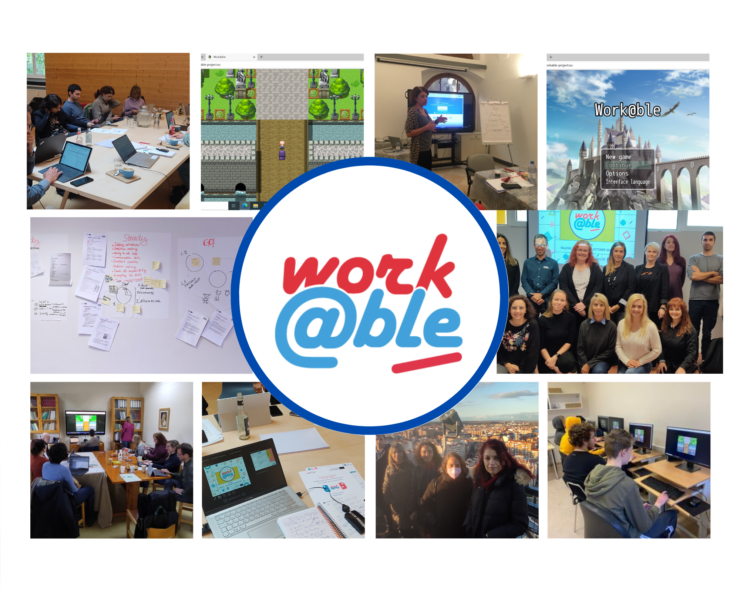
We were not experts on videogames, but we are very good team workers, and that was our ace under the sleeve. We worked on the creation of the game from scratch, starting by researching about the key skills trained by job coaches when they target people with disabilities like special learning needs, cognitive, developmental or mental health problems. At the same time we also defined the profile of the future users and the context in which the game was going to use.

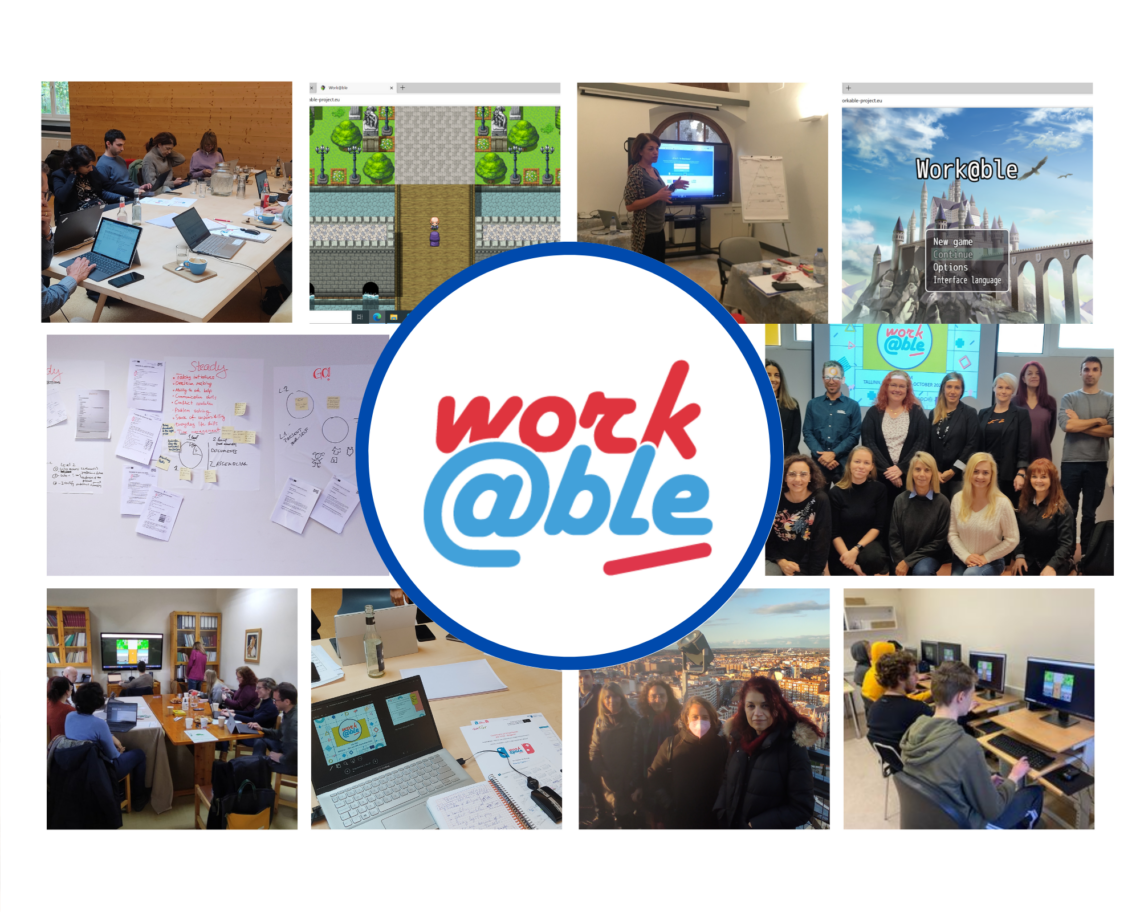
Once we got this picture of the contexts, the players and the skills, we designed the puzzles of the game. That was the most challenging stage of the game creation. We distributed the skills identified among partners, and each invented puzzles to train a set of skills. In October 2021, we met by first time face to face in Tallin, and during 2 days of work we shared our puzzle ideas, discussed, selected some, discuss, agreed the game logic, discussed, ordered the puzzles, discuss….And when we went home the concept of game was READY to be code!

Some months later, we met again in Valladolid to learn about the mock version of game. We played, discussed, proposed changes, discussed, agreed on outlook, discussed, layout the guidelines content, discussed…and we went home with a clear picture of game, which was completed and amended in a couple of months and we started testing it.

Several versions followed after another, by fixing bugs and including improvements till the game was STEADY to pass the definitive proof with job coaches and final users.

The pilot testing took place in 5 countries, with different profiles of job coaches and users, some more adjustments had to be done, and finally the game GO!

That is the story on how we created the game. Impossible without sharing ideas and discussing. Now the project is over, but I have the feeling that this is not a game over…the last time we met in Athens, we discussed and figured out a WORK@BLE 2.0!!

Be attentive, it is coming soon…
Trust = Magic

Trust. Often referred to as fringy, broken, distant – and at the same time infinite, never ending, and strong. What makes to people with apparently similar experiences define their trust in two different ways? Trust, this amazing phenomenon being both a choice and a gift. When being opened, it releases freedom, proximity and optimism, risk appetite and commitment. 

What makes you willing to go for it, in the moment you start a new job, in the moment you hire someone or make a change of career, in the moment you confess to someone and in the moment you forgive.

In lyk-z, we have trust as one of our core values in everything we do. We have an endless trust in the human ability to change, we trust that everything is possible despite what is found in the backpack. This trust creates a considerably larger room for action and liberty to be creative. It´s like the whole room takes a deep breath.

Most of us – if not all of us – have experienced lack of trust and rejection from our environments – based on our history and experience. “No way, don´t you remember how it went the last time?” That man is never going to change.”

What do you notice in situations where there is no trust? What becomes the truth you keep telling yourself? What about the situations where trust is all around – what becomes different?

When it comes to the word trust, various terms are used – most familiar is naïve. This is where your endless trust might be met with a warning. You might have to pay for this! Nevertheless, the price of distrust is countless misunderstandings, lost opportunities, constant high shoulders, and suspiciousness. You might be proven wrong in choosing trust and you might be proven right in your scepticism. Either way- YOU are always a bigger you and creating the very best conditions in cooperation as trustful. And- you can enjoy the journey (no matter the outcome).

It is natural that your trust will be challenged and tested continuous. Triggering situations makes your heart and mind feel like they´re tighten up for a moment, for then to bounce back into their original shape. Stirred, maybe, but not broken. It would be unfair allowing others to decide your own relationship with your trust. It´s yours to own no matter the size or shape.

We dare to say that trust is a choice. When working with youth at risk, this trust in human ability to change requires persistence in resistance. Trusting and allowing changes and growth of new potential is often related to fear when breaking old barriers. The real danger, is allowing old barriers, avoiding the direct questions and the natural trust that comes with it. We choose to nourish growth rather than limiting thoughts. The process can be demanding and with growth, growing pain is inevitable. Being stuck in old limiting beliefs is even more painful.

Being part of this wonderful journey of the Work@ble project, lyk-z has been responsible for developing the questions used in parts of the game. These questions are made from trust and from the perspective of enlightening the wealthy part of the individuals, as well as mastery. lyk-z has also been responsible for connecting the modules building bridges.

If there is anything youth at risk – or youth with extra challenges need – it is trust. Trust that they have what it takes, trust that they can develop, learn, grow, and change. We believe that this path is more easily accessible – by focusing on the strengths, values, and qualities, rather than the challenges.

We trust that this game will evoke a transformation of ways to strengthen self-esteem and build competence for ways to enter the work market for people with disabilities. Where there is 100% trust, magic moments will happen.

Vera Lykseth, lyk-z & daughters

Virtual career guidance – innovative and interactive

by Victoria Ammann, dafür

Young people often have unclear ideas about professions and companies and are unsure about choosing a profession. The most common questions are:

  • What can I expect during my apprenticeship?
  • How will everyday working life be like?
  • What opportunities does the profession offer?
  • How will my working environment be like?

One approach to solving this problem is virtual reality. Virtual reality is an artificially created environment with images, videos, sound and animations. With the help of virtual reality (VR) glasses or a smartphone, interested young people can watch videos and interact in games and apps. In doing so, they experience it as if they were right there in the action. The basis for virtual reality (VR) are 360-degree videos. Corresponding cameras film in every angle all around. Therefore, it is possible to experience what is happening in front of the camera, but also to the side and behind you.

This technology is used in various areas:

  • Virtual career orientation for young people (e.g. at trade fairs as well as in counselling interviews)
  • Presentation of companies and jobs
  • Virtual reality from the perspective of a person with a disability (e.g. everyday working life from the perspective of a wheelchair user)

Since the trial apprenticeship is one of the most important stages in career orientation, the virtual company tours offer a digital opportunity to get to know real apprentices, including job description and tasks.

VR can therefore offer the possibility to get a first direct insight into a future workplace by presenting apprenticeship professions and the environment accordingly.

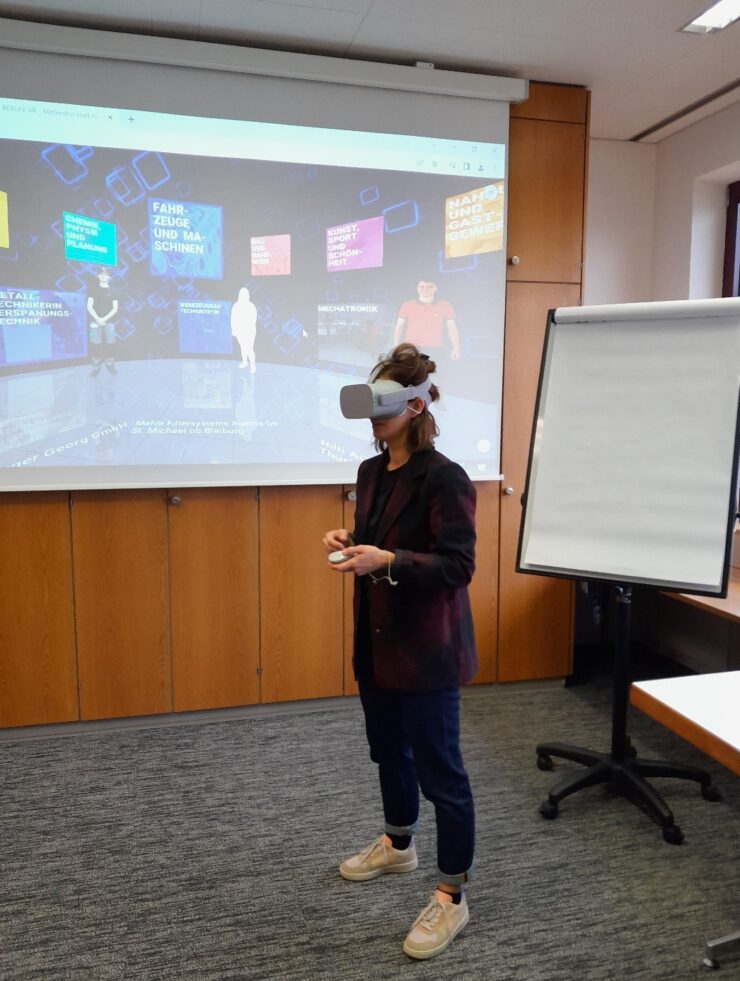
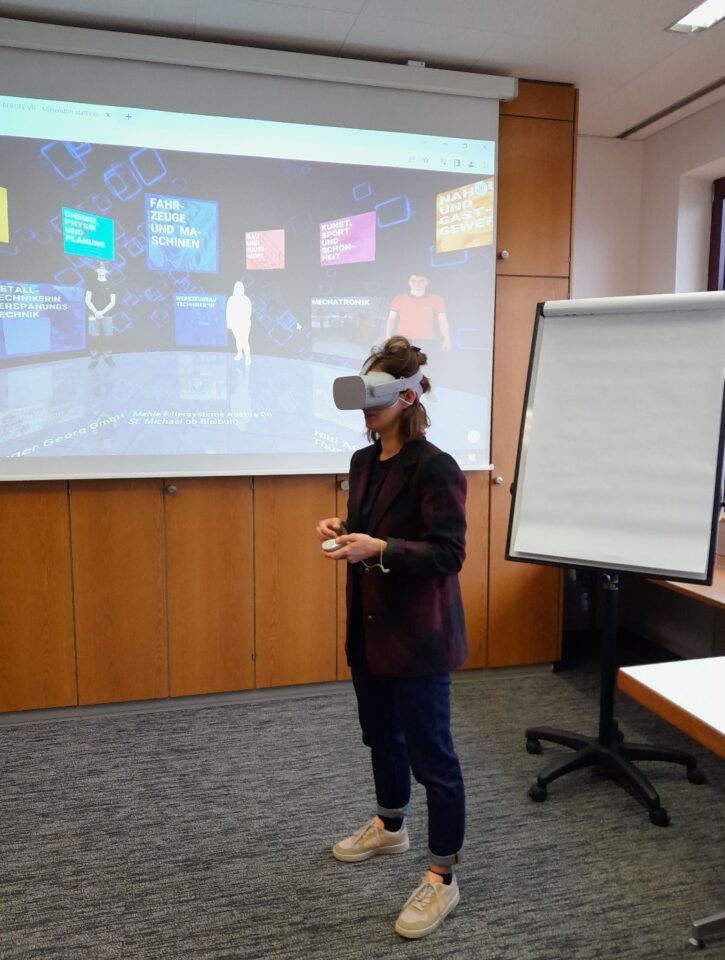
At dafür, a social service provider for persons with a disability in Austria, the virtual reality glasses “Oculus Go” are used within the “Virtual Career Orientation” app. This app was programmed for apprenticeship fairs using this new innovative tool to get young people excited about apprenticeships. Currently, 80 job profiles are available with information, 21 of which feature state-of-the-art 3D VR surround technology and surround sound.

Employees are trained regularly in the use of the VR glasses and the «Virtual Career Orientation» app for apprenticeships. It is particularly important for the job coaches to implement this innovative tool in their everyday work.

In this way, the app also offers the opportunity to make lesser-known apprenticeships accessible to a wider audience in an innovative way. The goal would be for career guidance teachers to also use the app in the classroom.

DIGITAL ACCELERATOR

By Astangu

Digital solutions can be very effective in teaching people with disabilities and engaging them, as long as we know the best ways to use it.

That is why Astangu Vocational Rehabilitation Centre has decided to up their technology knowledge by participating in a new program called Digital Accelerator.

Digital accelerator (DigiKiirendi) is a program for the whole personnel of a school, meant to keep up with fast-paced technology and how to use it in our advantage. This program will also help to raise confidence of using digital means while teaching and working with students.

Every worker in Astangu has to complete a 30 hour training program that has been put together with the consideration of work specifics and needs of Astangu. Program will help to develop new ways of teaching and learn teaching methodologies that will help teachers and specialists in their daily work, while providing an engaging method of learning for students with disabilities.

Digital accelerator (DigiKiirendi) will work with most schools in Estonia. They will not only teach the teachers, but everyone included in that school on how to work better with digital world and use it in their advantage. During the second half of 2022, six schools, including Astangu will partake in the program. The program itself consists of 32 academical hours, with the possibility to choose basic knowledge in the digital world or more specific topics for those, who know the basics. For example, learning how to work with different programs, websites, how to make and cut videos, how to do online crosswords and puzzles for students and many more engaging topics. School management will also participate in those to learn how to better support their staff and students in making steps towards better technological means.

Schools and institutions are constantly moving on a path of digitalization. It is very clear that projects like Work@ble are very necessary, as it will help people with special needs keep up with the digital world and make the means of technology more accessible to them. The game Work@ble project  has created will not only be a great tool for job coaches, but will also be a valuable part in digitalization progress that the world is going through.

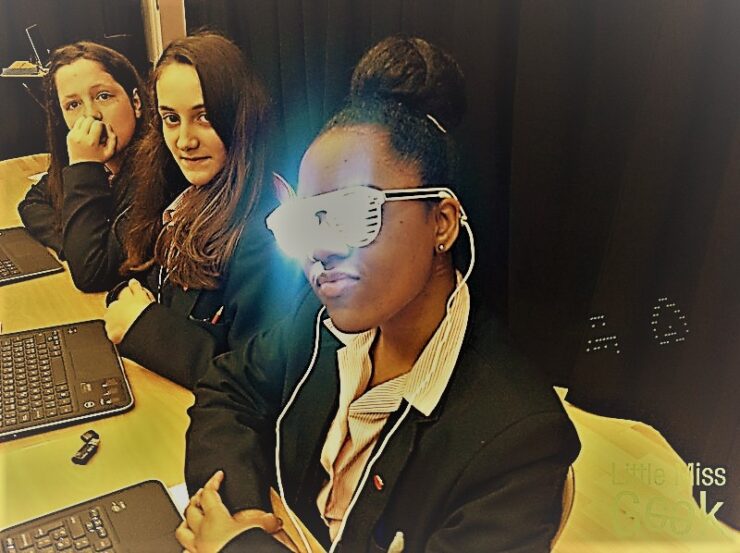
«Little Miss Geek Wearable Tech Event» by LadyGeekTV is licensed under CC BY-ND 2.0

VIDEO GAMES AND WELLBEING

By María Carracedo

There is a broadly extended opinion regarding video games as harmful for mental health. It is true that excessive gaming can certainly be harmful, (like any other activity done in excess) but using videogames in a moderated way can carry on benefits on people’s mental health and wellbeing.

In 2020, a research conducted by the University of Oxford found that playing video games may improve mental health and make people feel happier. For instance:

  • Cognitive stimulation: Playing video games forces gamers to deeply stimulate multiple different areas of the brain, this leads to the development of new dimensions of thinking.
  • Coping with stress: Playing constitutes a relief for the stress, immersing in a game is a great way of escaping for a while from the stresses of daily life.
  • Overcoming difficulties: Games make us find solutions to overcome in-game challenges, which can make gamers better equipped to deal with real-life obstacles and difficulties.
  • Feeling accomplished: In the game, there are goals and objectives to reach. Once the player achieves them, they bring him/her a lot of satisfaction, which improves the overall well-being.
  • Emotional resilience. When you fail in a game or in other situations, it can be frustrating. Video games help people learn how to cope with failure and keep trying. This is an important tool for children to learn and use as they get older.

Some mental health centers, like Mental Health Unit of the Reina Sofía Hospital in Córdoba (Spain), have started using videogames as a tool for improving psychological well-being, self-esteem, attention, concentration, fostering manual and creative skills, while helping to enhance interpersonal and social relationships of the patients.

According to the declaration that its Coordinator, Leonor Padilla, has made to the press, «the aim is to offer them a more attractive dynamic to prevent them from refusing to participate in leisure activities. We also use games that invite them to participate in sports and cognitive activities, which also helps them to improve their self-concept and, little by little, we manage to create guidelines for behavior modification, enhance socialization, always as a complement to the main intervention, which is the face-to-face one.”

Photo by DC STUDIO

MAKE DIGITAL GAMES

Why toys?

The roots of the games are as deep in time as the history of mankind. In ancient Greece the game was an integral part of both childhood and everyday life of the adults. The ancient philosophers were well aware of the importance of the game in shaping character, morals and physical skills of the individual. Plato said that the game a toddler plays is the profession is destined to follow. Thus, it not only contributes to learning, but highlights a child’s inclinations, talents and desires.

The role of the games in learning

We can say that the contribution of the game in learning is perhaps more important, even than the contribution of books.

As the great Einstein has said, «Play is a superior form of learning.»

From the youngest to the oldest, educational  games are implemented and of course transmit knowledge to children, teach and create feelings of joy and happiness. Through them, children express ideas, acquire skills, set new goals, are motivated and cultivate their creativity.

The relationship between games and development of social skills

Studies show that through games children acquire communication skills, learn how to control themselves, recognize emotions, learn to work in a team and deal with problems that may arise during the game, learn to cooperate and finally discuss and communicate their needs to others.

The power of digital games

Digital game-supported learning is a modern trend in the educational process.

Digital games offer the opportunity to engage in authentic activities and in a specific context, presenting realistic situations to deal with, which cover a wide range of subject areas, and promote research and exploratory learning processes.

Games, in all their forms, have always been used as tools of educating and socializing children. Digital Games today are considered one of the most exciting future prospects for use in education. The user benefits from digital games as they offer the ability to repeat, and practice. Games  adapt to the needs of the user. Digital games are proving to be more attractive and effective for young users.

The job coach – the key person

The role of the job coach is to guide, train and support the candidate to find the job of his or her dreams.

It should be a source of inspiration and mobilize the candidate while keeping his interest alive. Mainly he has to adapt the tools and interventions to the needs of the candidate employee and the needs of the labor market.

In this endeavor he could not ignore the transition to the digital era.

He therefore needs the appropriate modern tools to continue to do his job effectively and to prepare the prospective employee properly to meet the modern demands of the labor market.

Work@ble, a modern escape room, aspires to give a new dimension to the relationship between a job coach and a candidate.

Through the game the candidate will discover his dreams, desires, strengths and weaknesses and will work to acquire the skills needed to achieve his goals.

At the same time, by playing, everyone will improve their digital skills through the use of digital games.

We look forward to playing with the candidates.

And do not forget:

People do not stop playing because they get older. They grow old because they stop playing.

Oliver W. Holmes, 1809-1894, American author.